Down Syndrome and Home Healthcare: How I Support Your Family at Home
Introduction
If you are caring for someone with Down syndrome, you already know how beautiful and demanding that responsibility can be. You are balancing appointments, school or day programs, therapies, behavior support, and everyday life, all while trying to protect your loved one’s dignity and happiness. My role is to step into that reality with you, right in your home, and provide practical, respectful support that helps your loved one thrive and helps you breathe a little easier.
In this article, I share how I approach home healthcare for people with Down syndrome, how I support you as the caregiver, and what steps you can take if you are ready for more help.
How I See Down Syndrome in Everyday Life
What Down Syndrome Means for Your Family
When I meet someone with Down syndrome, I do not just see a diagnosis. I see a whole person with strengths, preferences, and goals. I understand that Down syndrome is a genetic condition caused by an extra copy of chromosome 21, which can affect learning, health, and development across a lifetime, but it does not define who your loved one is. What matters most to me is helping translate medical and therapy recommendations into daily routines that actually work in your home.
I know that common health concerns such as heart conditions, thyroid problems, sleep apnea, and vision or hearing challenges can feel scary and complex. I am here to help you manage these concerns more confidently by supporting daily tasks, monitoring changes, and making sure your loved one’s needs are addressed in real life, not just on paper.
The Emotional Load You Carry
I also understand that you may be carrying more than you let others see. You might be juggling school meetings, therapy visits, medical appointments, behavior support, and everyday life, all while trying to protect your loved one’s dignity and happiness. I have worked with many families who feel like they are one unexpected event away from a crisis, and I take that feeling very seriously.
On my blog, I share stories like “The Weight Mothers Carry With Severe Cerebral Palsy Care at Home,” because even though the diagnosis is different, the emotional strain can be very similar. I share these stories to let you know that I see you, I hear you, and I believe you deserve solid, dependable help, not just kind words.
You can read that article here if you would like to see how I think about caregiver stress and support:
https://www.essentiallivingsupport.com/blog/weight-mothers-carry-severe-cerebral-palsy
Why I Believe Home Healthcare Is So Important for Down Syndrome
Bringing Care Into Your Home, Not Just the Clinic
I know most care plans start in clinics, schools, or therapy offices. But your real life happens at home and in your community. That is why I focus on bringing support directly into the spaces where your loved one eats, sleeps, plays, and grows. My role is to help bridge the gap between what professionals recommend and what is realistic for you to do every day.
In my blog article “Understanding Supported Living: A Comprehensive Guide,” I talk about how support should be centered around the person and their goals, not around a schedule or an agency. I bring that same philosophy into home care for people with Down syndrome. I want your loved one to feel respected, heard, and genuinely involved in decisions about their own life whenever possible.
You can explore that guide here to see how I think about supported living and independence:
https://www.essentiallivingsupport.com/blog/supported-living-guide-cheyenne
The Kinds of Support I Can Provide at Home
When I come alongside your family, I can help with many aspects of daily life, depending on your needs, such as:
- Personal care like bathing, dressing, grooming, and toileting
- Meal support, from simple prep to feeding assistance
- Medication reminders and watching for changes in mood, sleep, or behavior
- Support with mobility and safe use of equipment
- Help with appointments, routines, and following through on medical or therapy plans
- Life skills and community involvement, tailored to your loved one’s abilities and goals
I do not see these as tasks to complete. I see them as opportunities to build confidence, independence, and trust, both for you and for your loved one. When we cook together, practice hygiene, or work through a bedtime routine, I am always thinking about how to make your day smoother and your loved one more capable over time.
How I Build a Person-Centered Home Care Plan With You
Taking Time to Really Understand Your Situation
Before I start working with your family, I take time to understand what life looks like for you right now. I ask about your loved one’s health history, strengths, communication style, and daily routines. I also ask where you feel things are working and where you feel stuck or overwhelmed.
I do not believe in one-size-fits-all care. Together, we create a plan that fits your routines, your values, and your goals, not just a generic checklist. On my Resources page, I talk about building personalized plans that reflect each person’s health, abilities, and preferences, and I bring that same mindset into every home I work in:
https://www.essentiallivingsupport.com/24/resources
Focusing on Life Skills and Long-Term Independence
As your loved one grows, independence often becomes an important goal, for them and for you. I can help teach and practice skills like:
- Handling money and small purchases
- Planning simple meals, grocery shopping, and cooking safely
- Doing laundry, cleaning, and organizing personal spaces
- Using transportation, navigating the community, and building social connections
I follow a step-by-step, patient approach so your loved one can succeed at their own pace. My Life Skills Development services are built around real-world practice, not abstract lessons. If you want a closer look at how I support skills like budgeting, meal planning, and household tasks, you can read more here:
https://www.essentiallivingsupport.com/life-skills-development
Creating a Safer, Calmer Home Environment Together
Home Changes That Make Everyday Life Easier
I believe your home should feel safe, comfortable, and understandable for your loved one. Sometimes that means making small changes that can have a big impact, such as:
- Adding grab bars or non-slip mats
- Rearranging furniture to create clear pathways
- Using labels, colors, or pictures to identify rooms, drawers, or items
- Improving lighting and reducing clutter to lower stress and confusion
- Locking or safely storing medications and cleaning products
In my blog post “5 Home Modifications for Dementia: Challenges Addressed,” I share ideas about how simple changes can reduce falls, confusion, and caregiver stress. Even though that article focuses on dementia, many of those practical home strategies also help when supporting someone with Down syndrome, especially if there are memory, sensory, or attention challenges.
You can get ideas here and we can adapt them together for your situation:
https://www.essentiallivingsupport.com/5-home-modifications-for-dementia-challenges-addressed
Supporting Social and Community Life
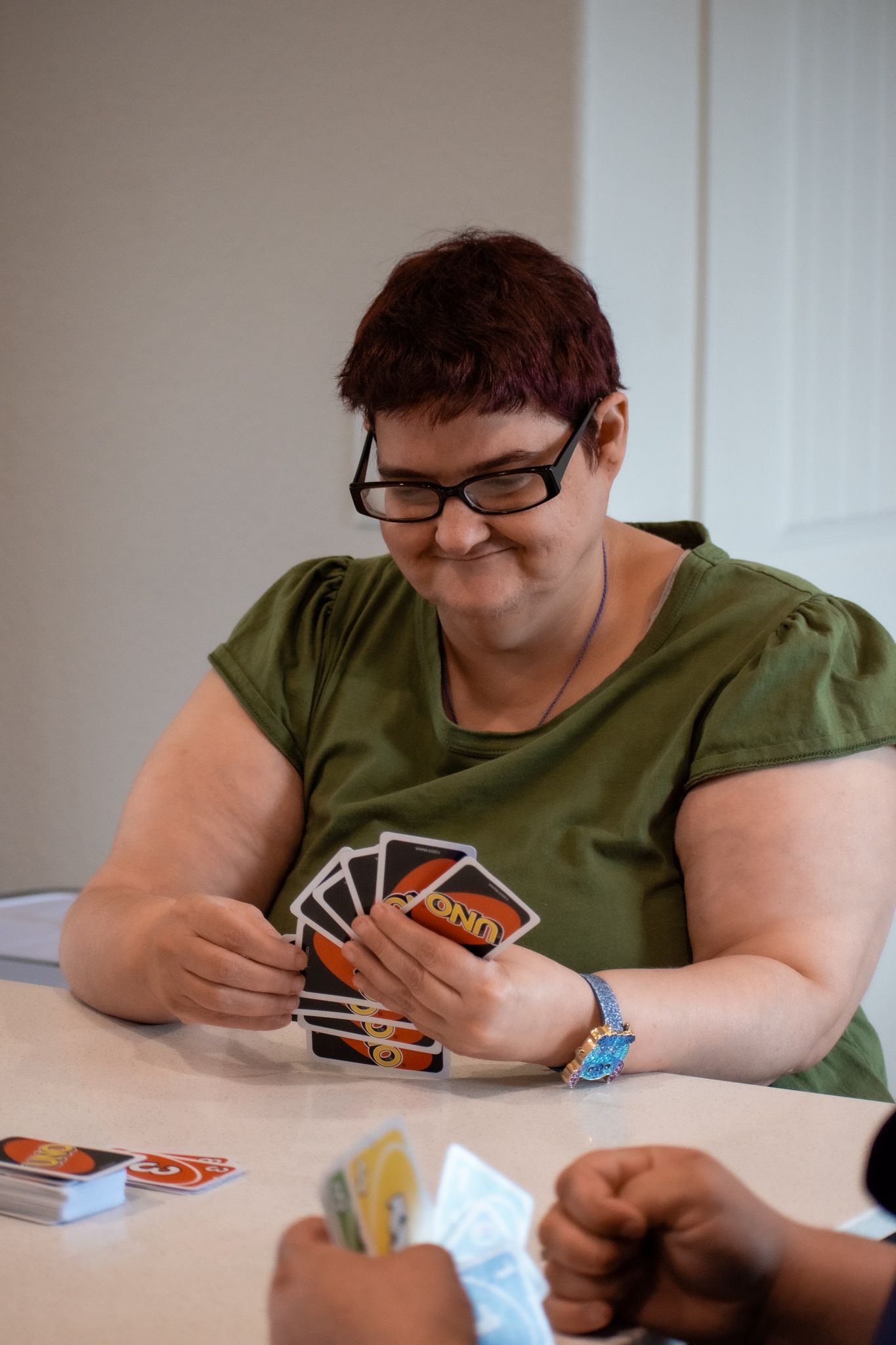
I do not just want your loved one to be safe at home. I want them to feel connected and included. I can help support social outings, community activities, volunteering, and other experiences that give life meaning. Social health is just as important as physical care, and I want your loved one to have opportunities to form friendships, practice communication, and participate in activities they enjoy.
Through my Community Integration services, I help people get out into the community in ways that are safe, structured, and respectful. Together, we can find the right balance between home-based support and community involvement so your loved one can grow, not just get by.
How I Support You as a Caregiver
Recognizing That Your Well-Being Matters Too
When I come into your home, I see you, not just as a parent or caregiver, but as a person with your own needs, fears, and hopes. I know that loving someone with Down syndrome can be incredibly rewarding and incredibly demanding at the same time. If you are exhausted, anxious, or stretched too thin, you are not failing. You are human.
In my writing and conversations, I talk openly about caregiver burnout because I have seen how quietly it can build. I want you to feel safe telling me when you are tired or unsure, so we can adjust the plan and bring in more support if needed. You do not have to wait until you are in crisis to ask for help.
Using Respite and Community-Based Options Wisely
One of the ways I protect your well-being is by encouraging and helping you use respite care and other home-and-community-based services. Respite is not a sign of weakness or abandonment. It is a tool that helps you keep going in a healthy way. It gives you time to rest, handle other responsibilities, or simply breathe, while your loved one continues to receive safe, structured support.
On my blog, I walk families through options like in-home support, shared homes, supported living, and other local resources in articles such as “Home and Community Care Guide for Veterans and I/DD Cheyenne” and “I/DD Residential Services in Cheyenne WY: Eligibility and Safety.” Even though those pieces mention veterans and other I/DD groups, the same decision-making steps apply when you are planning supports for a loved one with Down syndrome.
You can start exploring those options here:
https://www.essentiallivingsupport.com/blog/how-to-choose-home-and-community-based-care-cheyenne
https://www.essentiallivingsupport.com/blog/residential-services-adults-idd-cheyenne-wy
When You Are Ready, I Am Here to Help
When you reach out to me, I see it as the beginning of a partnership. I listen carefully to your story, your challenges, and your goals, and I work with you to create a plan that fits your real life, not an idealized picture. Step by step, we can build routines, supports, and safeguards that help your loved one with Down syndrome feel more secure and more independent, while you feel less alone and more supported.
You do not have to have everything figured out before you contact me. We can sort through your questions together and explore what services and funding options might be available in your situation. My role is to come alongside you, not to judge you, and to help your family find a more sustainable, hopeful way forward.
Frequently Asked Questions (FAQ)
1. Can my loved one with Down syndrome really benefit from home care?
Yes. I have seen how home care can make daily life safer, more structured, and more empowering for people with Down syndrome. By helping with personal care, routines, and skill-building, I can support your loved one’s independence and reduce stress for your whole family.
2. What can you help with day to day?
Depending on your needs, I can help with bathing, dressing, grooming, meals, medication reminders, mobility, skill-building, and community activities. I tailor what I do to your loved one’s abilities and your priorities, so we focus on what truly matters for your household.
3. Do you only help at home, or also in the community?
I absolutely help in the community too. I can support your loved one with outings, social activities, volunteering, and other experiences that build confidence and connection. My goal is to help them feel included and capable, not isolated.
4. How do you help my loved one become more independent?
I break down skills into small, achievable steps and practice them repeatedly in real-life situations, like cooking, cleaning, budgeting, or using transportation. Over time, this approach helps your loved one do more for themselves while still having support where it is needed.
5. I am exhausted. Will asking for help change anything?
Yes, it can. I know that caregiver burnout is real, and I take it seriously. By bringing in structured support and respite, I can share the workload with you so you can rest, recover, and be present with your loved one in a healthier way.
6. How do I take the first step toward getting help?
The first step is simply reaching out to me for a conversation. You can tell me about your loved one with Down syndrome, your challenges, and what you are hoping will change. From there, we can explore which services fit your needs and how to get started, one step at a time.
Conclusion
You do not have to walk this journey alone. Down syndrome brings unique joys and unique challenges, and it is completely understandable if you feel tired, worried, or unsure about what to do next. My commitment is to meet you where you are, with respect, practical support, and a plan that makes sense for your real life.
Whether you need help with daily care, skill-building, community participation, or simply a break so you can rest, I am here to stand beside you and your loved one. When you are ready, reach out, and we will take the next step together.
About the Author
Richard Brown Jr., MBA-HCM, BS Healthcare Administration, is the Founder of Essential Living Support, LLC, a veteran-owned home-based care provider in Cheyenne, Wyoming. I provide person-centered support for Veterans and adults with intellectual and developmental disabilities (I/DD) through VA Medical Foster Home services and Home and Community-Based Services. My focus is practical, safety-minded support that protects dignity, promotes independence, and strengthens community inclusion.
Transparency and Scope
This article is provided for general educational purposes and reflects my professional experience along with publicly available guidance. It does not create a provider-patient relationship and is not medical, legal, or clinical advice. For guidance specific to your situation, contact your VA care team, primary care provider, case manager, or an appropriate licensed professional.
Contact
If you would like to discuss home-based care options in Cheyenne, Wyoming, you can reach me here:
Contact: https://www.essentiallivingsupport.com/contact
Google Business Profile: https://maps.app.goo.gl/qP5oziBJHXgHGUhW8
Core Values of Essential Living Support, LLC
Dignity. Respect. Independence. Always.
Last updated: